

Every boom barrier gate relies on a DC motor to raise and lower the arm, and that motor's design has a direct impact on how long the barrier lasts, how much it costs to maintain, and how much noise and heat it generates. For installers and procurement managers, this creates a persistent dilemma: should you choose a brushed DC barrier with a lower upfront price, or invest in a Brushless Boom Barrier Gate for long-term reliability?
This article provides a technical and financial comparison of motor lifespan, maintenance requirements, noise levels, energy efficiency, and total cost of ownership (TCO) between brushless DC (BLDC) and brushed DC boom barrier motors, so you can choose the right drive system for your specific project.
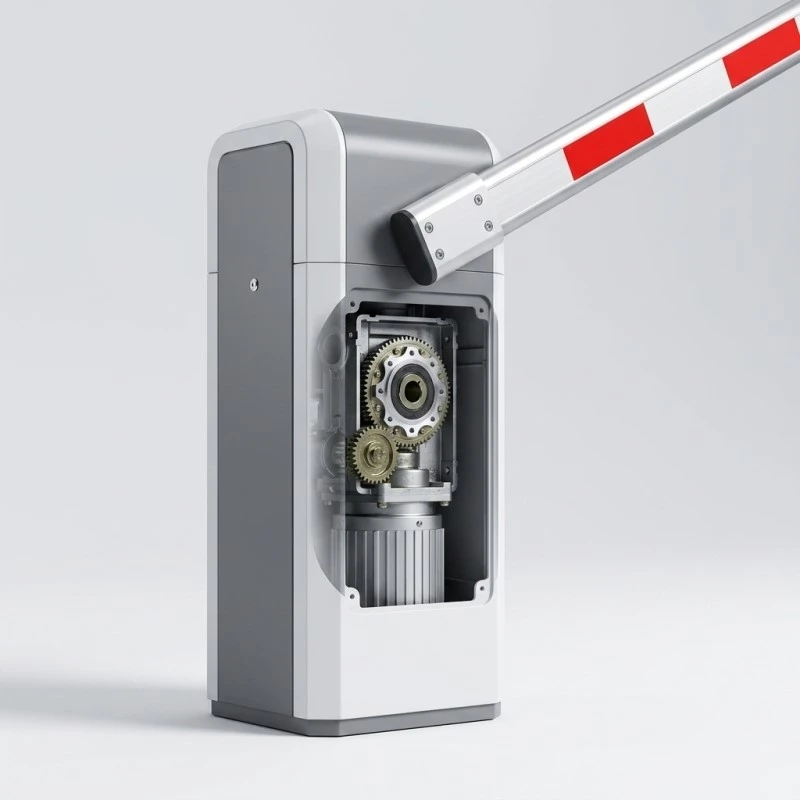
Table of Contents
- At a Glance: BLDC vs. Brushed DC Barrier Gate Comparison
- 1. Motor Lifespan & Wear: Physical Commutation vs. Electronic Switching
- 2. Maintenance Costs & Operational Downtime
- 3. Energy Efficiency, Heat Dissipation & Noise Levels
- 4. Total Cost of Ownership (TCO): ROI Calculation
- Final Verdict: Which Barrier Gate Drive System Should You Buy?
- Frequently Asked Questions (FAQ)
- Choose the Right Boom Barrier Gate with Anxia
At a Glance: BLDC vs. Brushed DC Barrier Gate Comparison
| Metric | Brushless DC (BLDC) | Brushed DC |
|---|---|---|
| Motor Lifespan | 30,000+ hours / 3,000,000+ cycles | 1,000 – 3,000 operating hours |
| Maintenance Needs | Minimal; no brush replacement required | Scheduled brush replacement & commutator cleaning |
| Noise Level | Under 50dB (ultra-quiet) | Noticeably higher due to brush friction and sparking |
| Efficiency | 85% – 93% | 75% – 80% |
| Heat Dissipation | Effective; stator-mounted windings dissipate heat through housing | Poor; armature traps heat during continuous cycling |
| EMI (Electromagnetic Interference) | Minimal; electronic commutation reduces EMI | Higher; brush sparking can interfere with nearby electronics |
| Initial Cost | Higher (20%–40% more than brushed) | Lower |
| Break-even Timeline | Often 12–18 months via energy & maintenance savings | N/A |
Quick verdict: For high-traffic commercial, industrial, or 24/7 applications, a Brushless Boom Barrier Gate is the stronger long-term choice. For low-frequency, budget-constrained, or temporary installations, a brushed DC barrier can still be a reasonable option.
1. Motor Lifespan & Wear: Physical Commutation vs. Electronic Switching
The Friction Factor: Carbon Brushes & Commutators
Brushed DC motors rely on carbon brushes making direct physical contact with a rotating commutator to deliver current to the motor windings. This constant contact creates friction every time the motor runs, and that friction wears the brushes down over time. In practice, this means the carbon brushes in a typical brushed barrier motor wear out after roughly 1,000 to 3,000 operating hours, depending on usage intensity.
Beyond simple wear, this mechanical contact also produces small electrical sparks (arcing) at the brush-commutator interface. Over thousands of cycles, this sparking contributes to dust accumulation from worn brush material and gradual degradation of the commutator's contact surface - both of which reduce motor efficiency and reliability as the unit ages.
The Brushless Mechanism: Magnetic Commutation
A Brushless Boom Barrier Gate eliminates this physical contact entirely. Instead of brushes and a commutator, BLDC motors use an electronic controller to switch current through the stator windings, creating a rotating magnetic field that drives the rotor - a process known as magnetic (electronic) commutation. Because there's no physical brush-to-commutator friction, there's no brush wear to speak of.
With brush wear removed from the equation, the primary limiting factor for BLDC motor lifespan shifts to bearing wear - a much slower, more predictable form of mechanical degradation. This is why brushless motors used in boom barrier applications are commonly rated for 30,000+ operating hours, or 3,000,000+ cycles, an order of magnitude beyond what a typical brushed motor can achieve.
2. Maintenance Costs & Operational Downtime
On-Site Maintenance Requirements for Brushed Motors
Because carbon brushes wear down predictably, brushed DC barrier motors require scheduled maintenance: periodic brush replacement, commutator cleaning to remove accumulated carbon dust, and inspection of contact surfaces for excessive wear. Each of these tasks typically requires a technician site visit, which carries real costs in labor, travel time, and replacement parts.
Beyond the direct cost, there's a hidden cost that's easy to underestimate: gate downtime. In a busy parking garage or commercial hub, every hour a barrier is out of service for maintenance is an hour of degraded access control - either vehicles are delayed, or the gate is left open (and unsecured) to keep traffic moving while repairs are scheduled.
The "Fit and Forget" Advantage of BLDC Gates
Because a Brushless Boom Barrier Gate has no brushes to replace, it offers what's often described as a "fit and forget" maintenance profile - installers can set it up and expect it to run reliably for years without routine motor servicing. This translates directly into reduced labor overhead for property managers, who no longer need to budget for recurring brush replacement visits.
This advantage compounds at high-frequency sites. The extended Mean Cycles Between Failures (MCBF) rating of BLDC motors means that even barriers cycling hundreds or thousands of times per day can go years between any motor-related service need, a stark contrast to brushed motors, which wear down faster the more frequently they're used.
3. Energy Efficiency, Heat Dissipation & Noise Levels
Operational Efficiency Comparison (85-93% vs 75-80%)
Efficiency measures how much of the electrical power fed into a motor is actually converted into useful mechanical torque, versus how much is lost as heat and friction. BLDC motors typically achieve 85% to 93% efficiency, compared to 75% to 80% for brushed DC motors. This gap exists largely because BLDC motors avoid the friction losses inherent in brush-commutator contact, converting a higher percentage of input power directly into the motion that raises and lowers the boom arm.
Heat Generation Under Heavy Duty Cycles
Motor design also affects how well heat is managed. BLDC motors are typically built with stator-mounted windings, positioned close to the motor housing, which allows heat to dissipate effectively into the surrounding structure and, ultimately, the ambient air. This design is well suited to continuous or high-frequency cycling without a significant temperature buildup.
Brushed DC motors, by contrast, generate heat primarily in the rotating armature - a location less effective for heat dissipation, since the heat is trapped inside the rotating assembly rather than being conducted efficiently to the housing. During continuous rush-hour traffic, this can cause brushed motor temperatures to climb noticeably higher than an equivalent BLDC motor under the same load.
Acoustic Performance & EMI Reduction
Noise is another meaningful differentiator. The friction and sparking inherent to brush-commutator contact make brushed motors noticeably louder in operation. BLDC motors, without this mechanical friction, can achieve ultra-quiet operation, often under 50dB - an important consideration for installations near residential buildings, hospitals, or other noise-sensitive environments.
Brush sparking also generates electromagnetic interference (EMI), which can potentially disrupt nearby electronics such as RFID card readers, access control sensors, or wireless communication equipment. Because BLDC motors rely on clean electronic switching rather than physical sparking contact, they produce significantly less EMI, reducing the risk of interference with the very access control systems the barrier is meant to work alongside.
4. Total Cost of Ownership (TCO): ROI Calculation
Upfront Purchase Price vs. 5-Year Operating Expenses
There's no getting around it: brushed DC barrier gates typically cost 20% to 40% less upfront than a comparable Brushless Boom Barrier Gate. For budget-constrained projects, that price gap is a real and legitimate consideration.
However, evaluating cost purely on the initial purchase price misses the larger financial picture. Over a 5-year operating horizon, brushed barriers accumulate ongoing costs that BLDC barriers largely avoid: scheduled brush replacements, technician labor for maintenance visits, higher electricity consumption due to lower efficiency, and the operational cost of downtime during service.
Break-even Timeline: How Energy Savings and Zero Brush Replacement Offset the BLDC Price Gap Within 12-18 Months
When these ongoing costs are factored in, many commercial and high-traffic installations reach a break-even point where the BLDC barrier's higher upfront cost is fully offset by accumulated energy savings and avoided maintenance expenses - often within 12 to 18 months of operation, depending on traffic volume. For sites running well beyond that break-even window (which describes most commercial parking, logistics, and industrial applications), the brushless option delivers a meaningfully lower total cost of ownership over its service life.
Final Verdict: Which Barrier Gate Drive System Should You Buy?
Choose Brushed DC if:
- You're working with a low-budget project or tight upfront capital constraints.
- The installation is temporary or short-term.
- The site has low-frequency usage, under approximately 500 cycles per day.
Choose Brushless DC (BLDC) if:
- You're specifying equipment for commercial parking facilities, logistics hubs, or toll booths.
- The site requires continuous, 24/7 high-traffic operation.
- Long-term reliability, low maintenance overhead, and lower total cost of ownership matter more than minimizing upfront cost.
For the majority of commercial and industrial applications, the extended lifespan, reduced maintenance, lower noise, and better energy efficiency of a Brushless Boom Barrier Gate make it the stronger long-term investment, even with a higher initial purchase price.
Frequently Asked Questions (FAQ)
Q1: How much longer does a BLDC motor last compared to a brushed DC motor?
A BLDC motor is typically rated for 30,000+ operating hours or 3,000,000+ cycles, compared to roughly 1,000–3,000 operating hours for a brushed DC motor, largely because BLDC motors eliminate brush wear entirely.
Q2: Do brushless boom barrier gates require any maintenance?
BLDC barriers require minimal routine motor maintenance since there are no carbon brushes to replace. Standard mechanical maintenance (gearbox, spring balance, sensors) may still apply, but the motor itself is largely maintenance-free.
Q3: Is a brushless barrier gate quieter than a brushed one?
Yes. BLDC motors typically operate under 50dB, since they avoid the mechanical friction and sparking that make brushed motors noticeably louder.
Q4: How long does it take to recover the higher cost of a BLDC barrier?
Depending on traffic volume, many commercial sites reach a break-even point within 12 to 18 months through combined energy savings and avoided brush-replacement maintenance costs.
Q5: Can brush sparking in a brushed motor interfere with access control sensors?
Yes, brush sparking generates electromagnetic interference (EMI), which can potentially disrupt nearby RFID readers or sensors. BLDC motors produce significantly less EMI due to their electronic commutation design.
Q6: Is a brushed DC barrier ever the better choice?
Yes, for low-budget, temporary, or low-frequency installations (under roughly 500 cycles per day), a brushed DC barrier can be a reasonable, cost-effective choice.
Choose the Right Boom Barrier Gate with Anxia
Since 2008, Shenzhen Anxia Heavy Industrial Co., Ltd. has specialized in intelligent turnstiles, boom barrier gates, and complete parking management systems, and is recognized as one of the top ten barrier gate brands in China, with a strong presence across European markets. Our Brushless Boom Barrier Gates are engineered for extended motor lifespan, minimal maintenance, quiet operation, and lower total cost of ownership - ideal for commercial parking, logistics hubs, and continuous high-traffic applications.
Our engineering team can help you compare BLDC and brushed DC options based on your site's traffic volume, budget, and long-term operational goals.
Not sure which motor type is right for your project? Contact Anxia today for a free consultation and product quote, and let our team help you choose the boom barrier gate that delivers the best long-term value for your site.


