

Power is the quiet weak point of almost every access control system. A barrier gate that stops working during a blackout leaves an entrance either blocked or wide open, and a barrier at a remote site may have no mains power at all. That is why more facility managers in 2026 are specifying a solar-powered or battery backup Brushless Boom Barrier Gate, a design that keeps working when the grid does not.
The reason brushless technology fits so well is simple. A 24V DC brushless (BLDC) motor already runs on low-voltage direct current, so it connects directly to a battery or a solar charge controller without bulky inverters or expensive UPS units. This guide explains how solar and battery backup systems work, compares the best configurations for 2026, shows how to size a panel and battery, and helps you decide which setup suits your site.
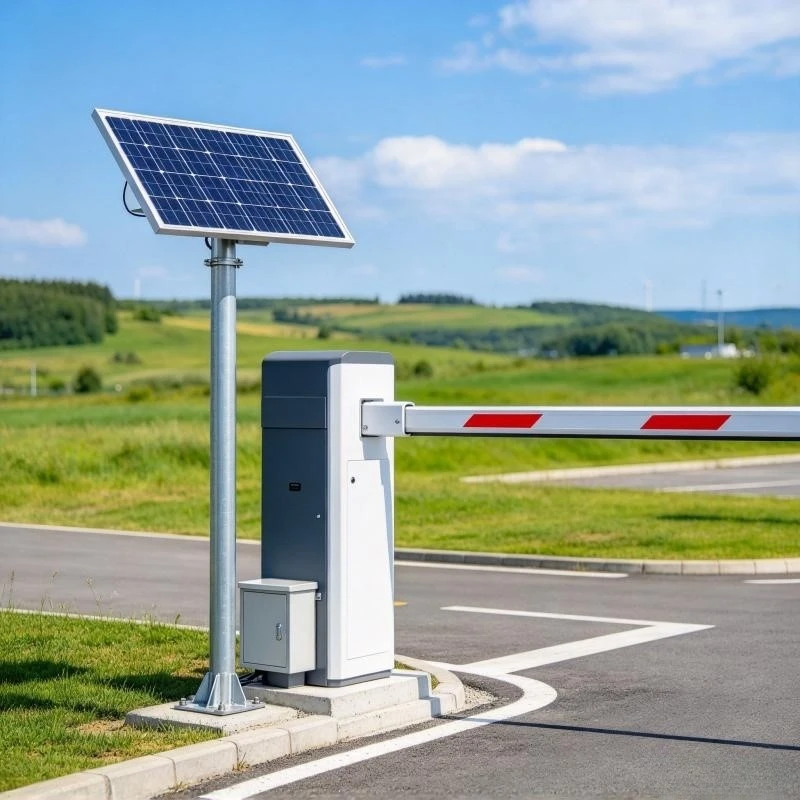
Table of Contents
- At a Glance: Best Solar-Powered & Battery Backup Barrier Gate Options for 2026
- Why Choose a Solar-Powered or Battery Backup Boom Barrier Gate?
- How Does a Solar-Powered Brushless Boom Barrier Gate Work?
- How Does Battery Backup Work on a Brushless Boom Barrier Gate?
- What Are the Best Solar-Powered & Battery Backup Boom Barrier Gate Types in 2026?
- #1. Best Overall Battery Backup Brushless Boom Barrier Gate
- #2. Best Solar-Powered Brushless Boom Barrier Gate for Remote Sites
- #3. Best Hybrid Solar + Mains Brushless Boom Barrier Gate
- #4. Best Heavy-Duty Backup Brushless Boom Barrier Gate for Critical Sites
- #5. Best Budget Battery Backup Brushless Boom Barrier Gate
- How Do You Size a Solar Panel and Battery for a Barrier Gate?
- What Key Features Should a Solar or Backup Barrier Have?
- How Should You Install and Maintain a Solar or Backup Barrier?
- What Do Solar and Backup Systems Cost, and Do They Pay Off?
- How Do You Choose the Right Solar or Battery Backup Barrier?
- Frequently Asked Questions (FAQ)
- Power Your Entrance Reliably with a Solar or Battery Backup Brushless Boom Barrier Gate from Anxia
At a Glance: Best Solar-Powered & Battery Backup Barrier Gate Options for 2026
| Option | Power Source | Typical Backup / Autonomy | Best For |
|---|---|---|---|
| Best Overall Battery Backup Barrier | Mains + 24V battery | Hundreds of cycles during an outage | Commercial garages, office parks |
| Best Solar-Powered Barrier for Remote Sites | Solar panel + battery | Multi-day autonomy with sizing | Off-grid lots, farms, mining and utility sites |
| Best Hybrid Solar + Mains Barrier | Mains, solar, and battery | Continuous operation, lower energy bills | Sustainability-focused facilities |
| Best Heavy-Duty Backup Barrier | Mains + larger battery bank | Extended outage coverage | Ports, logistics hubs, hospitals |
| Best Budget Battery Backup Barrier | Mains + compact battery | Short outage coverage | Small commercial lots |
Why Choose a Solar-Powered or Battery Backup Boom Barrier Gate?
What Happens to a Standard Barrier During a Power Outage?
A conventional AC barrier simply stops. The arm freezes in whatever position it was in, and staff must release the clutch and lift the arm by hand. If the arm is stuck down, traffic stops. If it is stuck up, the site is unsecured. A Brushless Boom Barrier Gate with battery backup avoids both problems by continuing to open and close normally for hours.
Why Is 24V DC Brushless Technology Ideal for Backup Power?
Because the motor and control board already run on 24V DC, a battery connects directly to the system. There is no energy lost converting battery power to AC and back to DC, which means the same battery lasts far longer than it would behind an inverter. Brushless motors also draw less power per cycle than comparable AC motors, stretching autonomy further.
Who Benefits Most From Solar-Powered Barriers?
Remote parking lots, farms, rural facilities, construction and mining sites, and utility compounds often have no practical way to bring mains power to the entrance. Trenching cable can cost more than the barrier itself. A solar-powered barrier avoids that cost and can be installed almost anywhere there is sunlight and a flat concrete pad.
How Does a Solar-Powered Brushless Boom Barrier Gate Work?
What Components Make Up a Solar Barrier System?
| Component | Function |
|---|---|
| Solar panel | Converts sunlight to DC power |
| Solar charge controller (MPPT or PWM) | Regulates charging and protects the battery |
| 24V battery bank | Stores energy for night, cloudy days, and peak use |
| Brushless barrier control board | Powers the motor and manages sensors |
| Low-power sensors and readers | Radar, RFID, and remote receivers with low standby draw |
How Does the Barrier Use Energy Day to Day?
A brushless barrier uses a small amount of power while idle (standby) and a short burst of energy for each open and close cycle. Solar panels recharge the battery during daylight, and the battery covers the night and cloudy periods. A well-designed system has enough battery capacity to run for several days with no sun at all.
Why Does Standby Power Matter So Much?
At an off-grid site, standby draw runs 24 hours a day and often consumes more total energy than the cycles themselves. A control board with low standby consumption and a sleep mode is the single most important feature of a solar-ready barrier.
How Does Battery Backup Work on a Brushless Boom Barrier Gate?
What Is the Difference Between Native 24V Backup and a UPS?
With a traditional AC barrier, backup requires a UPS that converts battery DC to AC, which the barrier's power supply then converts back to DC. Each step wastes energy and adds cost. A native 24V brushless barrier connects the battery directly to the DC bus. When mains power fails, the switchover is seamless and the barrier never notices.
What Types of Batteries Are Used?
Sealed lead-acid (AGM) batteries are the common, low-cost choice and work well for occasional outages. Lithium iron phosphate (LiFePO4) batteries cost more but offer longer cycle life, deeper usable capacity, lighter weight, and better performance in heat, which suits solar installations that cycle the battery daily.
How Many Cycles Can a Battery Backup Run?
Runtime depends on battery capacity, arm length, and speed. As a rough guide, a typical 24V battery pack can support hundreds of open and close cycles during an outage. Confirm the real figure with your supplier's specification, because it varies with arm weight and settings.
What Are the Best Solar-Powered & Battery Backup Boom Barrier Gate Types in 2026?
#1. Best Overall Battery Backup Brushless Boom Barrier Gate
Key highlights: Native 24V battery input, automatic mains-to-battery switchover, low-battery alarm, 100% duty cycle brushless motor.
This is the right choice for most commercial garages and office parks. The barrier runs from mains power in normal conditions, charges a small battery in the background, and switches over instantly during an outage. A low-battery alarm warns staff before backup power runs out.
#2. Best Solar-Powered Brushless Boom Barrier Gate for Remote Sites
Key highlights: Low standby consumption, integrated solar charge controller input, wide operating temperature range, IP65 housing.
Built for locations without mains power, this configuration pairs a low-draw control board with a solar panel and battery bank. Sleep modes minimize idle energy use, and a weatherproof housing protects the electronics in dusty, wet, or hot outdoor conditions.
#3. Best Hybrid Solar + Mains Brushless Boom Barrier Gate
Key highlights: Accepts mains, solar, and battery inputs, reduces grid electricity use, continues running during outages.
For facilities that want lower energy bills and a smaller carbon footprint, the hybrid setup draws from the solar panel first, uses mains power as a top-up, and relies on the battery during outages. It delivers the sustainability benefits of solar without the risk of running flat during a long cloudy spell.
#4. Best Heavy-Duty Backup Brushless Boom Barrier Gate for Critical Sites
Key highlights: Larger battery bank, long boom arm support (up to 6m), continuous duty rating, layered safety sensors.
Ports, logistics hubs, and hospitals cannot afford an entrance failure. This configuration uses a larger battery bank to cover extended outages and a heavy-duty motor to handle long arms and high cycle counts without strain.
#5. Best Budget Battery Backup Brushless Boom Barrier Gate
Key highlights: Compact battery pack, simple control board, brushless reliability at an accessible price.
Small commercial lots and retail sites still benefit from outage protection. A compact battery covers short outages, keeping the barrier operational long enough to cover most real-world power failures.
How Do You Size a Solar Panel and Battery for a Barrier Gate?
What Information Do You Need First?
Gather four numbers: the barrier's standby power draw, the energy used per open-close cycle, the number of cycles per day, and the average daily sunlight hours at your location. Your supplier can provide the first two from the specification sheet.
What Does an Example Sizing Calculation Look Like?
The figures below are for illustration only. Always replace them with the values from your barrier's actual specification sheet.
| Parameter | Illustrative Value |
|---|---|
| Standby power | 8 W (192 Wh per day) |
| Energy per cycle | 1 Wh |
| Cycles per day | 300 (300 Wh per day) |
| Total daily energy | About 500 Wh |
| Autonomy target | 2 days without sun |
| Battery capacity needed (with safety margin) | About 1,300 Wh (for example 24V, 55Ah) |
| Solar panel (4 peak sun hours, system losses) | About 180 W, round up to 200 W |
What Safety Margins Should You Add?
Add at least 20 to 30 percent to cover battery aging, cold-weather capacity loss, and dust on the panel. In regions with long winters or frequent cloud cover, increase both panel and battery size.
What Key Features Should a Solar or Backup Barrier Have?
Low Standby Power Consumption
This is the most important specification for off-grid use. Ask for the exact standby wattage and whether a sleep mode is available.
Native Charge Controller and Battery Management
Look for built-in or directly compatible charge control, low-voltage cutoff to protect the battery, and clear battery status indication.
Wide Voltage Tolerance and Soft Start
Soft start reduces the current surge when the motor begins moving, which protects the battery and extends its life.
Weatherproof Construction
Solar installations are outdoors by definition. Choose galvanized steel housings, powder coating, and an IP54 or IP65 rating suited to your climate.
Safety Sensing That Works on Low Power
Choose radar, photocell, and loop interfaces designed for low-power operation, so safety features do not drain the battery.
How Should You Install and Maintain a Solar or Backup Barrier?
Installation Tips
Face the solar panel toward the equator with an unobstructed view of the sky, keep it clear of tree shadows, and mount it high enough to avoid dirt splash and vandalism. Place batteries in a ventilated, shaded enclosure, because heat shortens battery life. Use appropriately sized cable for the run between the panel, controller, and barrier to avoid voltage drop.
Maintenance Checklist
- Clean the solar panel surface regularly.
- Check battery voltage and terminal condition every few months.
- Load test the battery twice a year by simulating an outage.
- Replace lead-acid batteries every three to five years, or follow the lithium battery manufacturer's guidance.
- Inspect cable connections and enclosure seals for moisture.
What Do Solar and Backup Systems Cost, and Do They Pay Off?
A solar or battery backup barrier costs more than a basic mains-only unit because of the added panel, controller, and battery. The payback comes from three sources. At remote sites, solar avoids the cost of trenching and running mains cable. At commercial sites, battery backup prevents the revenue loss and security risk of a blocked or open entrance. Everywhere, brushless motors keep maintenance low, so the total cost of ownership stays attractive. For critical facilities, avoiding even one major outage incident can justify the investment.
How Do You Choose the Right Solar or Battery Backup Barrier?
- No mains power available: choose the solar-powered configuration (#2) and size the system with a safety margin.
- Mains power available, but outages are a concern: choose the battery backup configuration (#1) or the budget option (#5) for small sites.
- Want lower energy bills and a smaller carbon footprint: choose the hybrid configuration (#3).
- Critical site with long outage risk: choose the heavy-duty backup configuration (#4) with a larger battery bank.
Frequently Asked Questions (FAQ)
Q1: Can a boom barrier gate run entirely on solar power?
Yes. A brushless barrier with low standby consumption, a solar panel, a charge controller, and a properly sized battery can operate fully off-grid.
Q2: How long can a barrier gate run on battery during a power outage?
It depends on battery capacity, arm length, and traffic. A typical 24V backup battery supports hundreds of cycles, and larger battery banks extend this further. Check the figure for your configuration with your supplier.
Q3: Do I need a UPS for a brushless boom barrier gate?
Usually no. Because the motor runs on 24V DC, a battery connects directly, avoiding the cost and losses of a separate UPS and inverter.
Q4: What size solar panel does a barrier gate need?
It depends on standby draw, daily cycles, and local sunlight. Many installations use a panel in the 100 to 300 watt range, but you should size it from your barrier's actual specifications.
Q5: Which battery type is best, lead-acid or lithium?
Lead-acid AGM is inexpensive and fine for occasional outage backup. Lithium iron phosphate costs more but lasts longer and performs better in daily solar cycling and hot climates.
Q6: Do solar barrier gates work in cloudy or cold weather?
Yes, with proper sizing. Add extra battery autonomy and panel capacity for regions with long cloudy periods, and choose batteries rated for your temperature range.
Power Your Entrance Reliably with a Solar or Battery Backup Brushless Boom Barrier Gate from Anxia
Since 2008, Shenzhen Anxia Heavy Industrial Co., Ltd. has specialized in intelligent turnstiles, boom barrier gates, and parking management systems, and is recognized as one of the top ten brands in China, with a strong presence across European markets. Our Brushless Boom Barrier Gate range supports native 24V battery backup and solar-powered configurations, giving remote and critical sites reliable operation without complicated power equipment.
Our engineers can help you size the panel and battery for your site, choose the right arm and sensor package, and integrate the barrier with your access control system.
Planning an off-grid entrance or a more resilient one? Contact Anxia today for a free consultation and product quote, and keep your gate working when the power is not.


